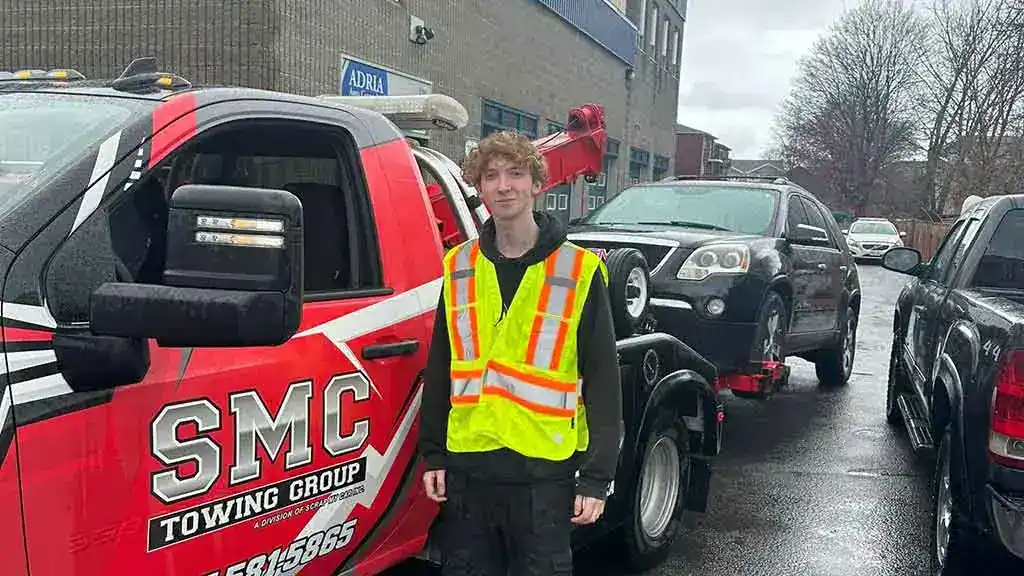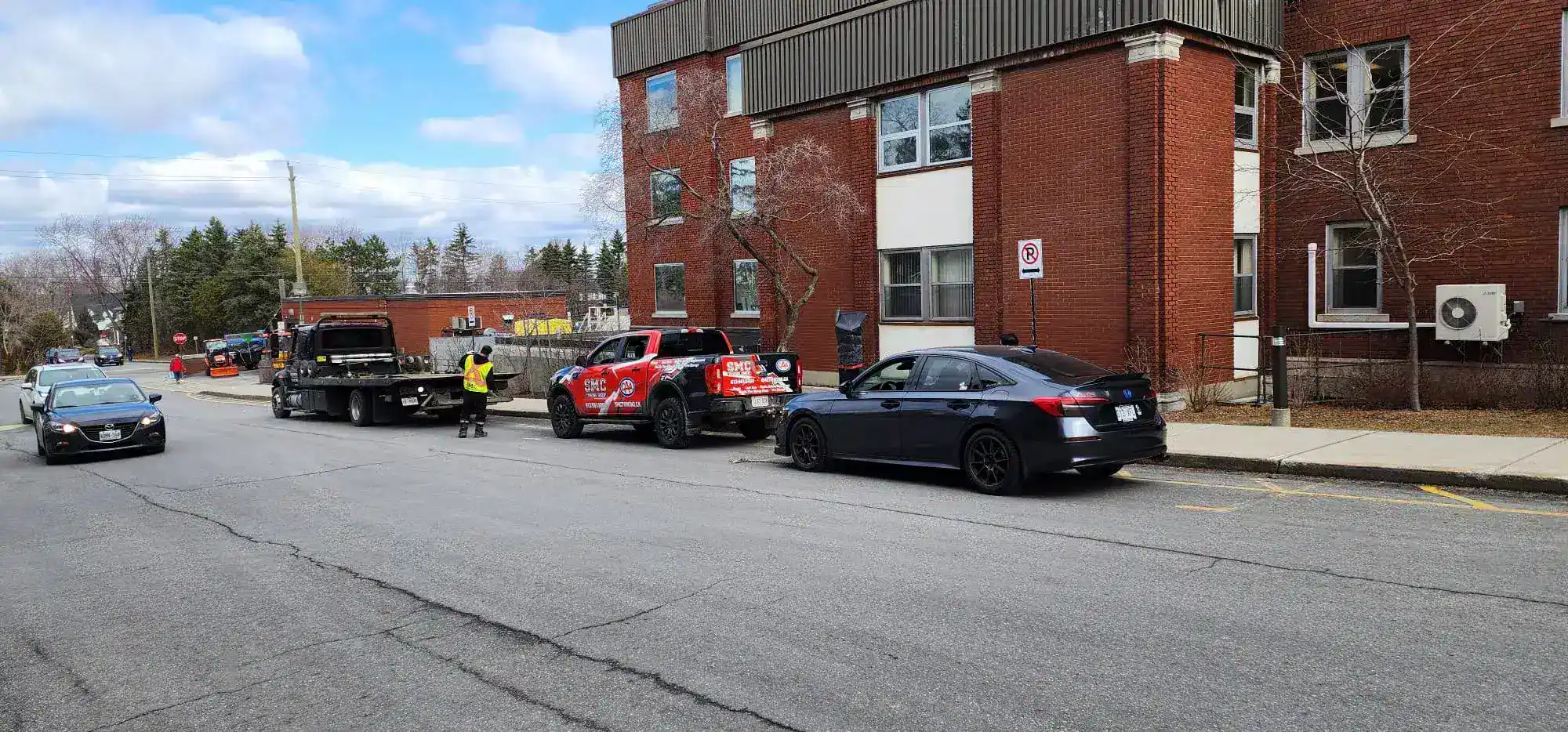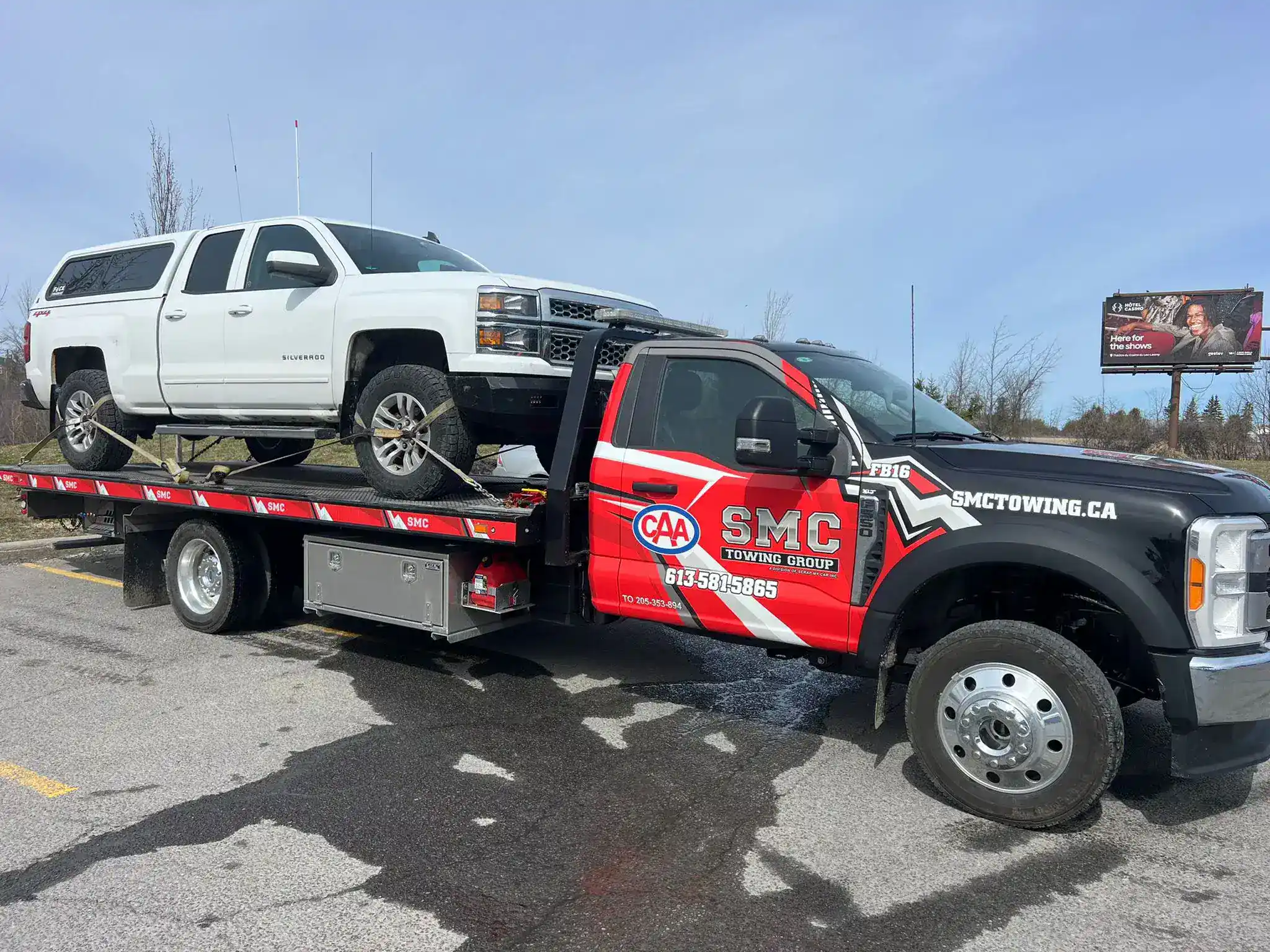
A flat tire on an Ottawa road gives no warning. One second the vehicle is driving normally, and the next there is a pull, a thud, or a shudder from the wheel well. What happens in the first 60 seconds matters more than anything that follows.
SMC Towing Group provides flat tire service in Ottawa across every neighbourhood and highway corridor in the region, 24 hours a day. This guide covers every step Ottawa drivers need from the moment the tire fails to the moment the vehicle is safely back on the road.
The First 30 Seconds: Stay Calm and Slow Down Safely
A flat tire changes how a vehicle handles. Front tire blowouts pull the steering sharply toward the flat. Rear tire failures cause the back of the vehicle to fishtail. Both feel alarming, and the instinct to brake hard is wrong.
Grip the steering wheel firmly with both hands. Ease off the accelerator gradually rather than braking. Let the vehicle slow on its own friction for the first few seconds while steering stays straight. Once the speed is below 50 km/h, light, steady brake pressure is safe. Abrupt braking at highway speed on a blown tire causes loss of control.
Activate hazard lights immediately. This is the first action, not the second or third. Other drivers on the Queensway or Bank Street need visual warning before the vehicle slows unexpectedly. Hazard lights, a steady speed reduction, and controlled steering are the three actions that keep the first 30 seconds safe.
Where to Stop: Highway, City Street, or Parking Lot
Where the flat occurs shapes every decision that follows. Ottawa’s road network includes high-speed corridors, dense urban streets, and quieter suburban routes, each with its own stopping protocol.
Highway 417 and the Queensway
The 417 and the Queensway are the most dangerous locations to experience a flat tire. Traffic moves at 100 km/h and shoulder space is narrow in the downtown core. The goal is to reach the next exit whenever possible, even if it means driving slowly on a damaged tire. A rim on pavement causes less harm than a sudden stop in an active lane of the 417. Once at an exit or a widened shoulder, pull as far right as the surface allows, turn on hazard lights, and stay inside the vehicle with the seatbelt fastened. Exit through the passenger-side door only, never the driver’s door into traffic. Call 24-hour towing in Ottawa immediately from inside the vehicle before attempting any tire assessment.
City Streets and Residential Areas
On Ottawa city streets such as Hunt Club Road, Merivale Road, or Baseline Road, pull into the nearest parking lot, side street, or bus bay before stopping. A flat tire on a busy arterial road with moving traffic is not a safe place to work. Drive slowly on the flat for 200 to 300 metres to reach a safer position rather than stopping in a through lane. Once parked safely off the road, hazards on and engine off, a proper assessment is possible.
Parking Lots and Underground Structures
A flat tire discovered in a parking lot or underground garage is the safest scenario. The vehicle is stationary and there is no traffic risk. Still, avoid changing a tire in the travel lane of a parking lot. Move the vehicle one parking space at a time on the flat to reach a corner or open area with room to work. In underground structures, note the level and section number before calling for help, since operators need this information to find the vehicle quickly.
Once Stopped: Assess the Tire Before Touching Anything
With the vehicle parked safely, hazards flashing, and the engine off, a brief assessment determines the next steps.
Look at the tire visually before crouching near it. Is it completely flat or partially deflated? A fully collapsed tire that has been driven on may have rim damage in addition to the flat. Is there a visible nail, screw, or piece of road debris in the tread? Debris still embedded in the tire is actually holding air out of a wound that would otherwise leak faster. Do not remove embedded objects on the roadside. Note whether the damage appears to be on the tread face or on the sidewall. Sidewall damage, a visible bulge, or a large gash means the tire cannot be safely repaired and must be replaced.
Check the surrounding area before opening the door. On any roadway, confirm no traffic is approaching before stepping out. Place reflective triangles or flares at least 30 metres behind the vehicle if they are in the trunk. This is especially important at night, in fog, or during an Ottawa snowstorm when visibility for approaching drivers is reduced.
Change the Spare or Call for Help: How to Decide
Not every flat tire should be changed by the driver on the roadside. Knowing when to change and when to call determines how long the delay lasts and whether it is safe.
When to Change the Spare
Changing a spare is reasonable when all of the following conditions apply. The vehicle is completely off the road on a stable, level, paved surface. There is room to work around the vehicle safely. The driver has a serviceable full-size or temporary spare, a working jack and wrench in the vehicle. The weather and lighting allow safe work. And the flat tire is in the tread area without sidewall damage or rim deformation. When every one of these is true, changing the spare is a reasonable choice.
When to Call a Flat Tire Service
Call for professional help in any of these situations. The vehicle is on or near a highway shoulder. The flat occurred in the dark, during rain, snow, or low visibility. The spare tire is missing, flat, or a compact donut spare that is already damaged. The rim appears bent or cracked. The damage is on the sidewall. Or the driver is alone, unfamiliar with the process, or not physically able to operate the jack safely. Roadside tire changes with oncoming traffic nearby account for a significant number of preventable roadside injuries each year. SMC Towing Group operators cover Nepean, Kanata, Gloucester, Orleans, and Gatineau and arrive in most Ottawa neighbourhoods within 30 to 45 minutes.
AWD and Electric Vehicles: A Special Case
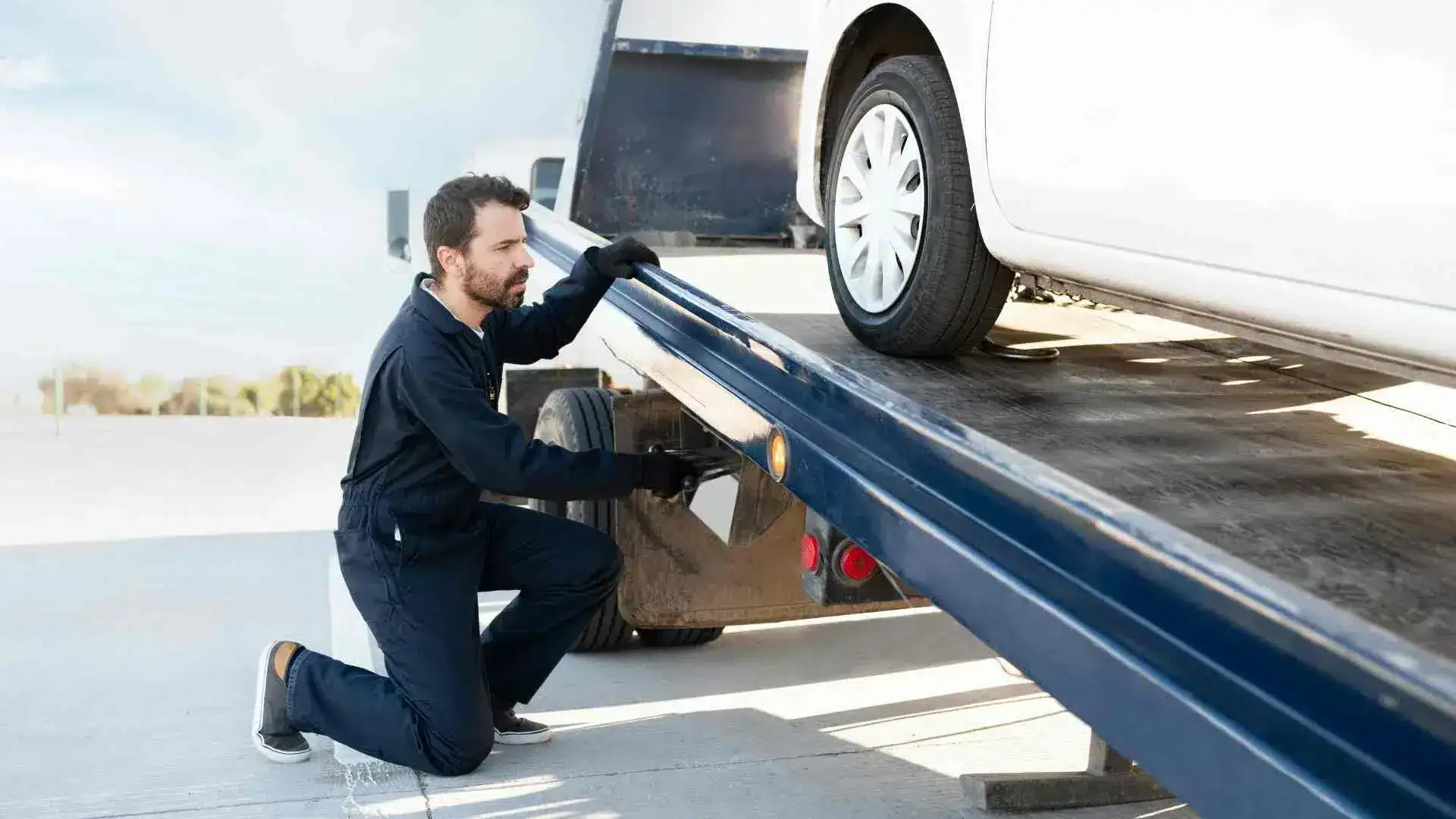
Drivers of all-wheel-drive vehicles face a decision that sedan drivers do not. AWD systems such as Subaru Symmetrical AWD, Audi Quattro, and Toyota RAV4 AWD require all four tires to be within 2/32 of an inch of the same tread depth. Fitting a compact spare or a new full-size tire with significantly different tread depth forces the AWD transfer case to work constantly to compensate for the difference in rolling diameter. Over several hundred kilometres this damages the drivetrain, with repair costs ranging from $3,000 to $5,000. For most AWD vehicles, the correct action after a flat is to have all four tires assessed before driving on a mismatched replacement. Flatbed towing in Ottawa is the safest option for AWD vehicles with a flat, preserving the drivetrain while the vehicle reaches a tire shop. Electric vehicles also require flatbed transport in most cases, as their weight and regenerative braking systems are incompatible with wheel-lift towing.
Ottawa Winter Flat Tires: What Changes in Cold Weather
Ottawa winters create flat tire conditions that do not exist in warmer months. Knowing what to expect prevents situations from becoming more serious than they need to be.
Tire pressure drops approximately one PSI for every 5 degrees Celsius of temperature drop. A tire that is correctly inflated at 35 PSI in October may read 25 PSI after an overnight freeze in January. At that pressure, a tire is significantly under-inflated and far more susceptible to a blowout from a pothole or road debris. The Ontario Ministry of Transportation recommends checking tire pressure monthly in winter and inflating to the pressure listed on the driver’s door jamb sticker, not the number printed on the tire sidewall. More detail on winter tire requirements and safe driving is available from the Ontario Ministry of Transportation.
When a flat occurs in winter, the cold adds one complication that warm-weather flat tires do not have: a frozen lug nut or a jack that will not seat correctly on a snow-packed surface. Lug nuts that have not been removed since the last seasonal tire change can freeze seized to the hub. A breaker bar or extension rod on the lug wrench provides the torque to break them loose. Attempting to use a small emergency lug wrench against a frozen lug nut is one of the most common ways drivers injure themselves roadside in winter.
Do not wait beside the vehicle in temperatures below -15°C. Move to the passenger cabin or a nearby building and call roadside assistance in Ottawa from shelter. Operators working in Ottawa and Gatineau in extreme cold are equipped to work in those conditions. The driver is not expected to stand outside in a January windchill waiting for help.
Ottawa’s Pothole Season: The Cause Behind Most Flat Tires
Ottawa’s spring pothole season, typically running from late February through May depending on the winter severity, is the single largest cause of flat tires and rim damage in the city each year. The freeze-thaw cycle cracks asphalt, and heavy truck traffic on arterial roads accelerates the damage. Roads that are smooth in November can develop tire-eating craters by March.
The roads most frequently cited for pothole damage in Ottawa include sections of Carling Avenue, Hunt Club Road, Heron Road, sections of the Queensway ramps, and residential streets throughout Alta Vista and the east end. Pothole impacts at highway speed can cause an immediate blowout rather than a slow leak. The rim strikes the edge of the pothole with enough force to crack the wheel, fold the sidewall, or shear the valve stem entirely.
After a pothole impact, do not assume the tire is fine because it is still inflated. Internal damage to the sidewall cords can cause a delayed blowout minutes or kilometres later. Pull over at the first safe opportunity and inspect the tire for bulges on the sidewall. A sidewall bulge is a structural failure. The tire should not be driven on and needs replacement before returning to highway speeds.
What a Mobile Tire Service Operator Does On Arrival
Understanding what happens when a mobile tire operator arrives helps drivers give the right information on the call and know what to expect.
SMC Towing Group operators arrive with a portable floor jack rated for the vehicle weight, a full set of lug wrenches and torque tools, a breaker bar for frozen lug nuts, and in most cases a portable air compressor. The first step is a visual and physical assessment of the damaged tire. The operator checks the tread, sidewall, valve stem, and rim before recommending a course of action. If a spare tire is available and serviceable, the operator mounts it, torques the lug nuts to the vehicle’s specification, and confirms the spare is inflated to the correct pressure before the driver leaves.
When no spare is available, the tire has sidewall damage, or the rim is damaged, the operator discusses the options. A tow to the nearest tire shop or the driver’s preferred garage is the standard next step in those cases. The operator also checks whether the vehicle’s Tire Pressure Monitoring System requires a reset after the service, since most TPMS sensors activate any time tire pressure changes significantly.
Before leaving, the operator confirms the spare is correctly seated, all lug nuts are torqued, and the driver knows the limitations of the spare. A compact temporary spare in Ottawa is rated for 80 km/h maximum speed and a limited distance of roughly 80 to 100 kilometres. That is enough to reach a tire shop in Ottawa or Gatineau but not enough for a highway trip.
Conclusion
A flat tire on an Ottawa road is a manageable situation with the right steps. The first 30 seconds set everything up: ease off the accelerator, activate hazards, and steer steadily toward a safe stop. The location matters for what comes next. Highway situations call for a professional. City street and parking lot flats give more options. AWD and electric vehicles almost always require a flatbed. Winter adds cold, frozen lug nuts, and pressure drop. Pothole season adds hidden sidewall damage that appears safe until it is not.
SMC Towing Group serves Ottawa, Nepean, Kanata, Gloucester, Orleans, Gatineau, and surrounding areas around the clock with mobile tire service and towing. For other common roadside situations in Ottawa, the guide on what to do if locked out of a car in Ottawa covers every step of that scenario with the same level of detail.
Frequently Asked Questions
What should I do immediately after getting a flat tire on the road in Ottawa?
The first action is to keep control of the vehicle rather than stopping immediately. Grip the steering wheel firmly with both hands and ease off the accelerator slowly. Do not brake hard. A flat front tire pulls the steering toward the deflated side, and a flat rear tire causes fishtailing at the back. Allow the vehicle to slow naturally before applying light, steady brake pressure. Activate hazard lights as soon as the vehicle is responding predictably. The goal in the first 30 seconds is to slow safely while steering toward the road shoulder, the nearest parking lot exit, or the nearest highway ramp. Once the speed drops below 50 km/h, controlled braking is safe. Stopping suddenly in a moving lane of traffic, particularly on Highway 417 or the Queensway is more dangerous than continuing slowly to a safer pull-off point. Once stopped safely off the road with hazards flashing and the engine off, a full assessment of the damage can begin.
Is it safe to drive on a flat tire in Ottawa?
Driving on a completely flat tire is unsafe and causes rapid damage to the rim and potentially the vehicle’s suspension. However, driving slowly for a short distance200 to 300 metres to reach a safer stopping location is a reasonable trade-off in a dangerous situation. On a highway like the 417, reaching the nearest exit ramp at low speed on a flat is preferable to stopping in an active lane. On city streets, driving slowly to the nearest parking lot is acceptable. The key limits are: keep the speed under 20 km/h, go only as far as needed to reach safety, and accept that the rim may sustain some damage. A bent or cracked rim can be repaired or replaced at a tire shop. A roadside injury from stopping in active traffic cannot. If the tire has already been driven flat for more than a few hundred metres, the sidewall may have internal cord damage that makes it non-repairable even if the original puncture was small.
How do I know if my flat tire can be repaired or needs to be replaced?
Two factors determine whether a flat tire is repairable or must be replaced. The first is location: damage must be in the centre tread area, at least 1.5 centimetres from the shoulder of the tire. Sidewall damage, shoulder punctures, and any damage to the curved area between the tread and sidewall cannot be safely repaired. No legitimate tire shop will repair sidewall damage, as the sidewall flexes constantly while driving and cannot hold a repair under that stress. The second factor is size: the puncture must be smaller than 6 millimetres in diameter, roughly the width of a pencil. Most nails and screws fall within this limit. A tire that was driven flat, even for a short distance, may have internal cord damage from the sidewall collapsing. This damage is invisible from outside and can only be confirmed by removing the tire from the rim for inspection. If there is any bulging visible on the sidewall after a flat, the tire needs replacement regardless of where the original puncture was.
What is Ottawa’s pothole season and how does it affect tires?
Ottawa’s pothole season typically runs from late February through May, although the timing and severity varies each year based on the number of freeze-thaw cycles during winter. When temperatures rise above zero during the day and drop below zero at night, water seeps into cracks in the asphalt, freezes, expands, and widens the crack. Heavy truck traffic accelerates the breakdown. The result is road surfaces that can go from smooth to heavily cratered over the course of a few weeks. Pothole impacts at highway speed are among the most common causes of sudden blowouts and rim damage in Ottawa. A pothole struck at 100 km/h on the Queensway delivers enough force to crack an alloy wheel, collapse a sidewall, or shear the valve stem entirely. After any hard pothole impact, drivers should pull over at the next safe opportunity and inspect all four tires visually for sidewall bulges. A bulge indicates internal structural failurethe tire should not be driven at highway speeds before being inspected by a technician. Roads in Alta Vista, along sections of Carling Avenue, Hunt Club Road, and Heron Road are historically among the worst affected each spring.
Do I need a flatbed tow if I drive an AWD vehicle with a flat tire?
In most cases, yes. All-wheel-drive systems require all four tires to be within a very close range of the same rolling diameter. A new tire or a spare tire with significantly more tread than the remaining three creates a size mismatch that forces the AWD transfer case and centre differential to compensate constantly. Over even a moderate driving distance, this compensation produces heat and friction in the drivetrain that can cause premature wear or outright mechanical failure, with repair costs typically in the $3,000 to $5,000 range. The safest approach after an AWD flat is to flatbed the vehicle to a tire shop, where all four tires can be assessed and matched appropriately. Some drivers with good remaining tread opt to have a new tire “shaved” to match the others, which is a service some Ottawa tire shops offer. An SUV with recent, well-matched tires on the other three wheels may have more flexibility than one with significantly worn remaining tires. The owner’s manual is the first reference for the specific tolerance the manufacturer recommends.
How much does mobile flat tire service cost in Ottawa in 2026?
Mobile tire service in Ottawa where an operator comes to the vehicle location and swaps to the spare typically costs between $80 and $120 depending on the time of day and location. After-hours calls and locations outside the central Ottawa area may carry a slightly higher rate. This cost covers the operator’s travel to the location, the spare tire swap, lug nut torquing, and confirmation of spare pressure. If the vehicle requires flatbed towing to a tire shop because no spare is available or the damage is beyond a roadside fix, towing costs are separate and depend on the distance to the shop. Drivers with CAA memberships or roadside assistance coverage through their auto insurance should check their policy before calling, as flat tire service is commonly covered under roadside assistance plans. Always ask for a quoted price on the phone before the operator is dispatched, and confirm the invoice matches that quote before paying. Under Ontario’s TSSEA, operators are required to provide a clear price before service begins.