A stalled car on train tracks is one of the most dangerous situations a driver can face. The right response takes seconds, and the wrong one can be fatal. SMC Towing Group offers emergency towing across Ottawa and built this guide using verified Canadian rail safety guidance. It covers the correct order of steps and how Ottawa’s winter conditions increase the risk. It also covers how to recover the vehicle once everyone is safe.
Get Out of Your Vehicle Immediately
The first step is always the same, regardless of whether a train is visible. Every occupant needs to exit the vehicle right away. Do not pause to gather belongings or attempt to assess the situation first.
Seat belts and door locks can jam in a stalled vehicle, so checking every exit is important. If a door will not open, try another door or a window immediately. Every second spent inside the vehicle reduces the time available to get to safety.
This step applies even if no train is currently in sight. Trains can appear faster than expected and are quieter than most drivers assume.
Move Away from the Tracks at a 45-Degree Angle
Getting away from the vehicle matters, but the direction matters too. Safety experts recommend moving at a 45-degree angle away from the tracks, toward the direction a train would come from. This feels counterintuitive, but it moves a person away from where flying debris lands on impact.
SMC Towing Group includes this detail because it is the piece most people get wrong under pressure. Moving straight back, parallel to the tracks, still leaves a person in the path of debris if a collision happens. The correct angle puts real distance between a person and that debris zone.
At least 30 metres of distance from the tracks is the general safety benchmark. That distance should be covered as quickly as possible, regardless of the exact angle taken.
Locate the Blue and White Emergency Notification Sign and Call for Help
Every railway crossing has a blue-and-white sign posted nearby with a toll-free number and a location code. This is the fastest way to alert the railway directly about a vehicle on the tracks. The railway can then contact any approaching train before it reaches the crossing.
Calling this number takes priority over calling 911 first, since it goes straight to the railway’s dispatch. Give the exact location code printed on the sign, since this pinpoints the crossing precisely. After that call, contact 911 and explain the situation in full.
If the sign cannot be found quickly, call 911 immediately rather than search further. Every second matters more than finding the specific number.
Never Try to Restart or Push Your Vehicle Off the Tracks
The instinct to save the vehicle is strong, but it costs valuable time. Restarting a stalled engine rarely works immediately and wastes the seconds needed to reach safety. Pushing the vehicle alone is nearly impossible and puts the person doing it directly in danger.
SMC Towing Group sees this instinct arise constantly, even when no train is visible. A vehicle is replaceable. The time spent trying to save it is not.
Once everyone is safely away and the railway is notified, the vehicle becomes a recovery problem rather than a safety one. That distinction matters, and it comes after every person is accounted for.
What to Do After Your Vehicle Is Hit by a Train
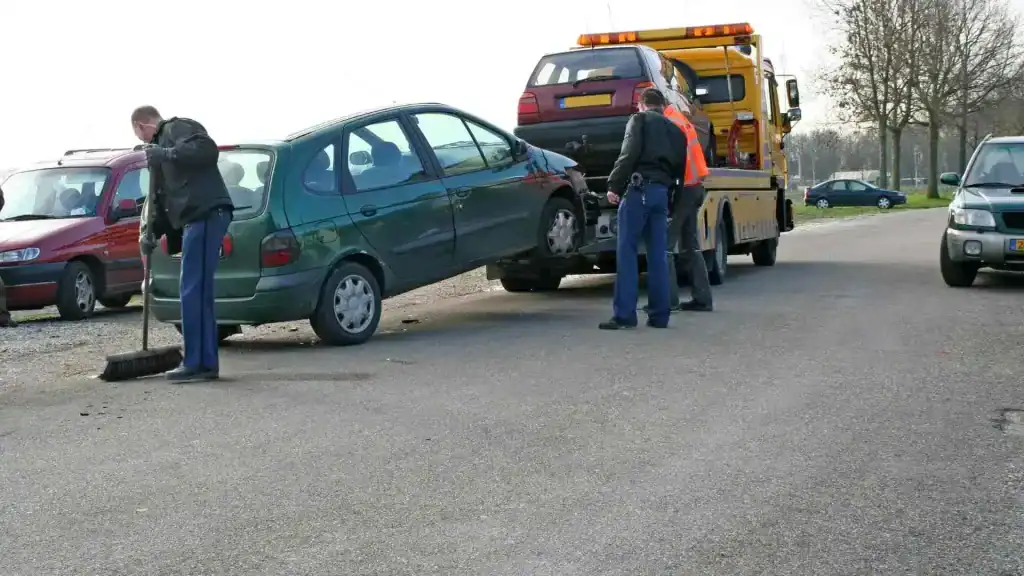
A vehicle struck by a train becomes a collision scene, not a simple recovery job. Emergency services take priority, and the area gets secured before anyone approaches the vehicle again. This applies regardless of whether occupants escaped safely beforehand.
Collision and accident towing handles the vehicle only after police and rail authorities have finished their on-scene work. Insurance documentation and a police report both typically follow standard collision procedures at this point. The towing step comes last, once the scene is fully cleared.
This scenario differs from a simple stall, since evidence preservation and investigation take priority over quick vehicle removal.
If your vehicle gets stuck on train tracks, your safety comes first. Once everyone is clear and authorities have secured the area, SMC Towing Group is available 24/7 to provide fast vehicle recovery and towing across Ottawa. Call (613) 801-2476 for immediate assistance.
Why Ottawa Winters Increase the Risk of Getting Stuck on Train Tracks
Snow and ice buildup at rail crossings can hide the exact track edges, making it easier to misjudge clearance. A vehicle can slide or get stuck in ways that would not happen on clear pavement. This risk increases during and after heavy snowfall.
Ottawa’s crossings, including areas such as Barrhaven, face this risk every winter. 24-hour towing in Barrhaven and similar coverage across the region exists partly because winter creates more of these situations. Slower ploughing at some crossings can leave hazards in place longer than on main roads.
Extra caution at any crossing during or after snowfall reduces the chance of getting stuck. Slowing down and confirming clearance before crossing matters most in these conditions.
How to Recover Your Vehicle Safely After a Train Track Incident
Once everyone is safe and authorities have been notified, attention shifts to the vehicle itself.
Vehicle Recovery Options
Winching and vehicle recovery handles vehicles that are stuck rather than damaged by a collision. A stuck vehicle often just needs to be safely pulled clear of the crossing. This differs from a standard tow, since recovery equipment handles the initial extraction.
Arranging a Tow Once Everyone Is Safe
24-hour towing picks up once the vehicle is clear of the tracks and ready for transport. This step occurs only after the railway or emergency services confirm the crossing is safe. Ottawa’s rail crossings are covered around the clock for exactly this reason.
Train Track Safety Tips from Operation Lifesaver Canada
Operation Lifesaver Canada’s rail safety guidance forms the basis of the core steps in this guide. The organisation tracks Canadian rail safety data and works directly with railways across the country. Their guidance reflects real incident patterns, not general assumptions.
A motorist is roughly forty times more likely to die in a train collision than in one involving another vehicle. Most collisions occur within 40 kilometres of the driver’s home, often on routes the driver takes daily. Familiarity with a crossing does not reduce the actual risk.
Reviewing this guidance before an emergency happens, not during one, makes the correct response more automatic under pressure.
Conclusion
Getting stuck on train tracks is rare, but the correct response must happen quickly and in the right order. Get out, move at the right angle, call the crossing’s emergency number, then 911. The vehicle only matters once every person is safe.
SMC Towing Group built this guide around verified Canadian rail safety guidance, not general assumptions. For what comes next if the situation involves a collision, see What to Do After a Car Accident in Ottawa.
If you need emergency towing, winching, or vehicle recovery after a train track incident anywhere in Ottawa, contact SMC Towing Group at (613) 801-2476 for prompt, professional assistance, day or night.
Frequently Asked Questions
What is the first thing to do if a car gets stuck on train tracks?
Get out of the vehicle immediately, even if no train is currently visible anywhere nearby. Do not pause to gather belongings or attempt to restart the engine first, since every second matters. Every person in the vehicle should exit immediately and move to a safe distance from the tracks.
Which direction should someone move if a train is approaching?
Safety experts recommend moving away from the tracks at a 45-degree angle, toward the direction the train is actually coming from. This counterintuitive angle moves a person away from where flying debris tends to land, rather than directly into its likely path of travel.
What is the blue and white sign at a railway crossing for?
It is an Emergency Notification System sign posted near the crossing, with a toll-free number and a location code specific to that crossing. Calling this number alerts the railway directly, allowing them to warn an approaching train before it ever reaches the crossing.
Should I call 911 or the railway number first if my car is stuck on the tracks?
Call the number on the crossing’s blue-and-white Emergency Notification sign first, since it connects directly to the railway’s dispatch team. After making that call, contact 911 and clearly explain the full situation. If the sign cannot be found quickly, call 911 immediately instead.
Is it safe to try pushing a stalled car off train tracks?
No. Pushing a stalled vehicle off the tracks alone is extremely difficult and puts the person doing it in direct serious danger. The correct response is to get everyone away from the vehicle first and treat the vehicle itself as a recovery problem afterwards, not a priority to save.
Why do train and vehicle collisions happen more often near a driver’s home?
Most train and vehicle collisions occur within 40 kilometres of the driver’s home, often on routes driven regularly without much conscious thought at all. Familiarity with a crossing can create a false sense of safety, leading drivers to cross without the same caution used on unfamiliar roads.